PPRA | REGULATION 35 | COMMUNITY SCHEMES
THE COURT DID NOT GRANT BLANKET PROTECTION.
THAT IS WHY EVERY ESTATE, HOA AND PROPERTY PRACTITIONER SHOULD PAY ATTENTION.

Many practitioners treat POPIA, PAIA, the CPA and the National Opt-Out Registry as separate compliance topics.
They are not.
In reality, a single enquiry from a prospective buyer or tenant may activate all four.
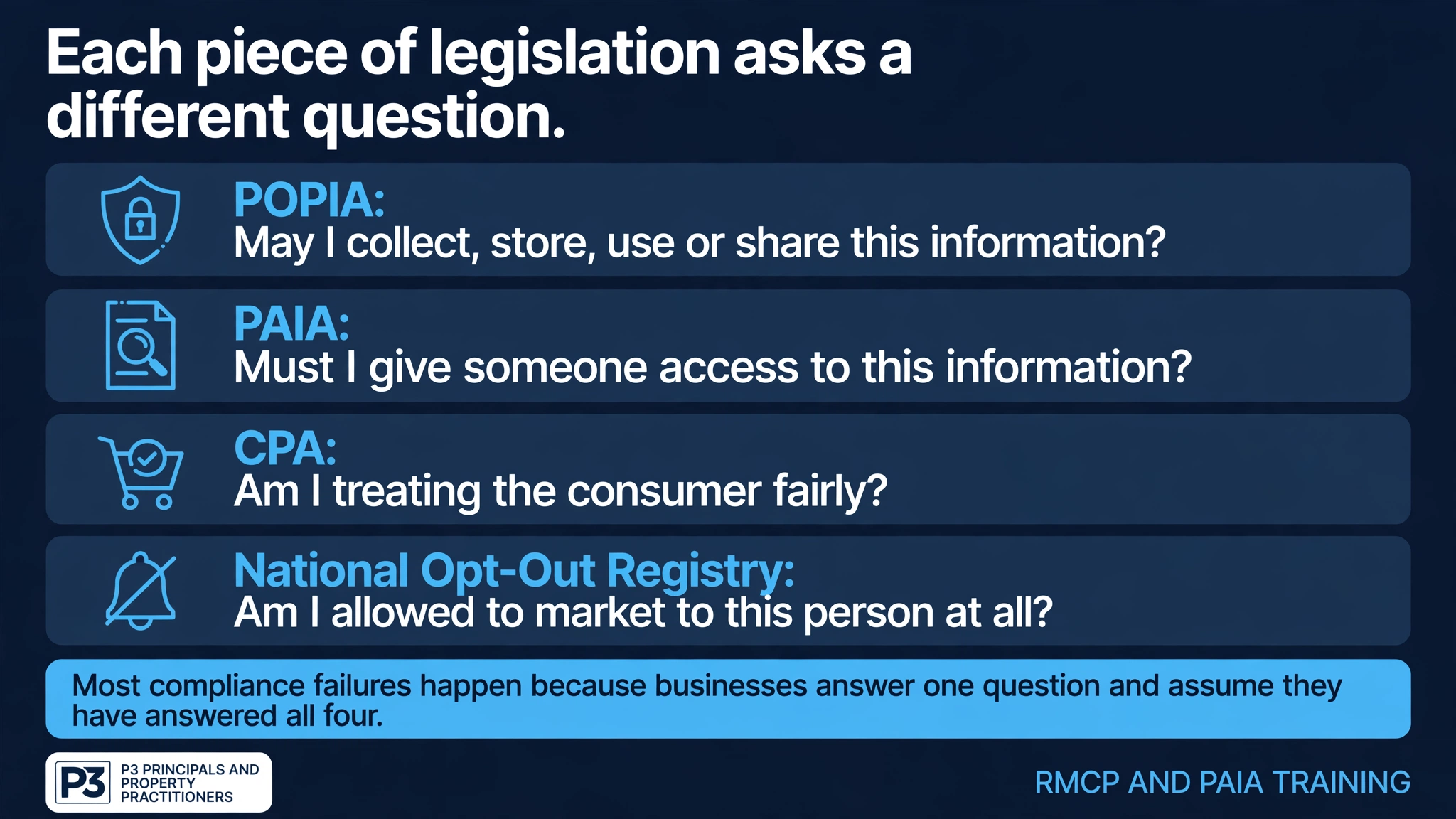
Four Laws. Four Questions.
The easiest way to understand the interaction is to stop thinking about legislation and start thinking about questions.
The POPIA Trap
A buyer completes an online enquiry form.
The buyer provides a name, email address and cellphone number.
POPIA may permit the business to collect and store those details because there is a legitimate business purpose.
That does not automatically create a right to use the information for future marketing campaigns.
POPIA answers whether you may process the information.
It does not automatically answer whether you may market using the information.
The National Opt-Out Registry Changes Everything
Many practitioners still operate under the assumption that if a consumer provided their contact information, marketing is automatically permitted.
That assumption can be dangerous.
The consumer may have registered an opt-out against direct marketing communications.
The business may legally possess the information while simultaneously being restricted from using that information for marketing purposes.
That is where many organisations become exposed.
The right to hold information and the right to market using that information are not the same thing.
Then Comes The CPA
Even if marketing is allowed, the Consumer Protection Act introduces another test.
Is the marketing fair?
Is it truthful?
Is it potentially misleading?
A communication can comply with POPIA and still create CPA risk.
An AI chatbot can comply with POPIA while generating statements that create CPA exposure.
The channel is not the issue.
The representation is.
And Finally PAIA
Months later the consumer may ask:
"What information do you hold about me?"
Now a completely different statute becomes relevant.
PAIA governs access to records.
The organisation may be required to provide access while simultaneously ensuring that other people's protected information is not disclosed.
Once again, a different question is being asked.
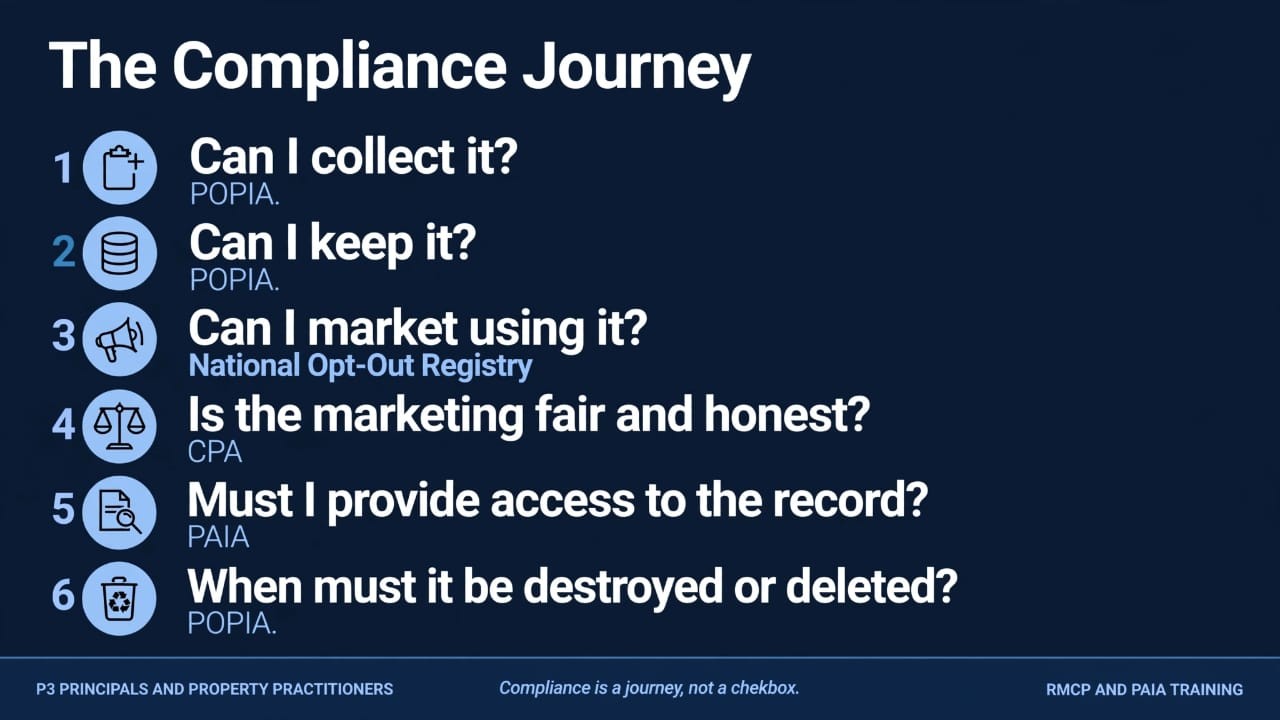
The Compliance Journey
The Real Lesson
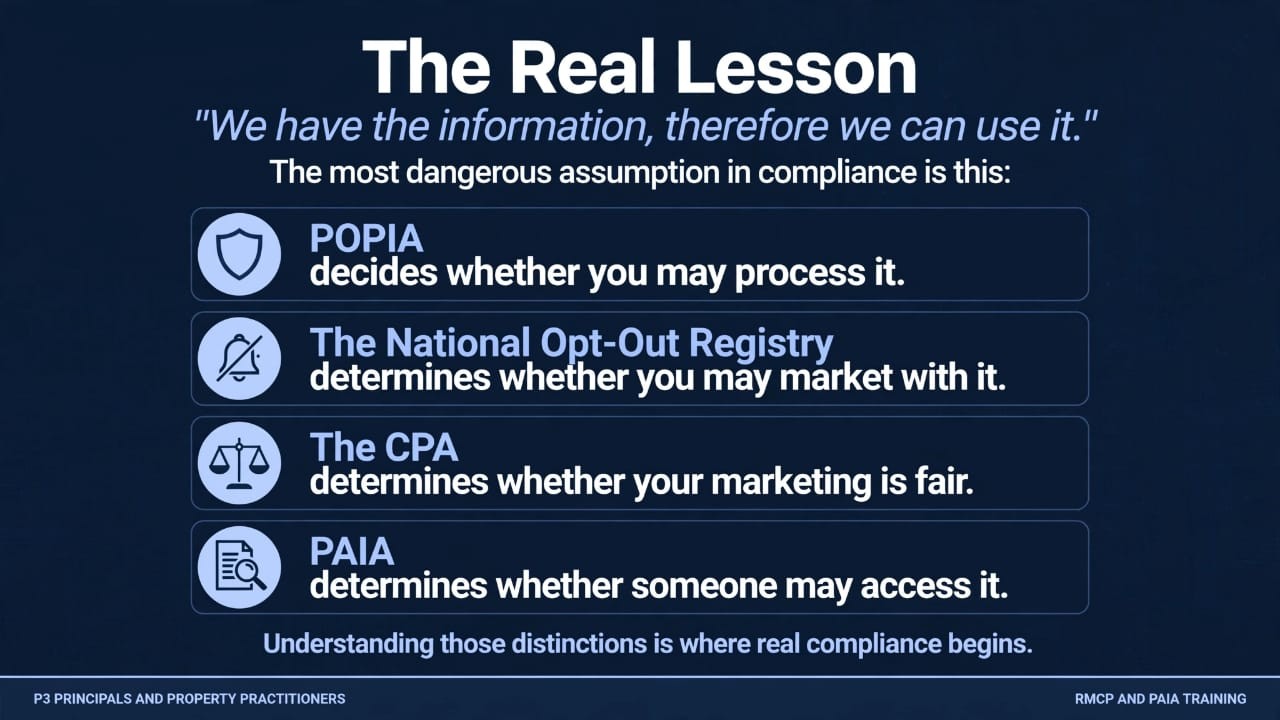
The most dangerous assumption in compliance is this:
"We have the information, therefore we can use it."