Most accountable institutions view an FIC inspection as a threat.
That is understandable.
An inspection can identify non-compliance.
Non-compliance can lead to remedial action.
Serious or extensive non-compliance can be referred for possible administrative sanction.
But treating the inspection only as a threat wastes a significant part of its value.
The inspection is also an independent test of whether your compliance system actually works.
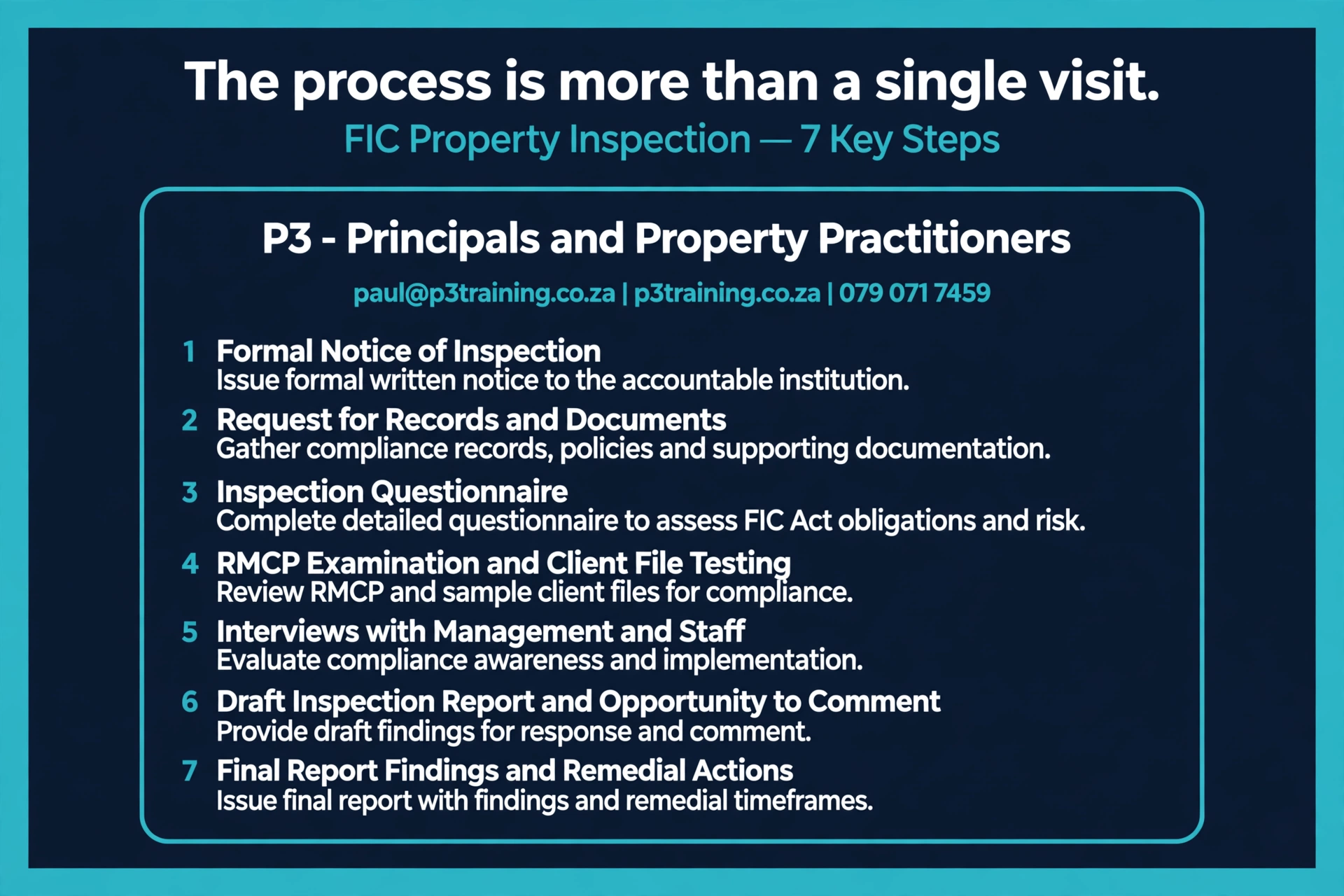
THE PROCESS IS MORE THAN A SINGLE VISIT
THE QUESTIONNAIRE IS ALMOST A COMPLIANCE CURRICULUM
The FIC inspection questionnaire examines far more than whether an RMCP exists.
It may test:
- FIC registration and goAML information.
- Risk and Compliance Return submissions.
- RMCP approval, review and implementation.
- Governance under section 42A.
- Training under section 43.
- Customer Due Diligence.
- Client risk rating.
- Beneficial ownership.
- Politically exposed and prominent influential persons.
- Record keeping.
- Cash threshold reporting.
- Suspicious transaction reporting.
- Targeted Financial Sanctions screening.
It does not merely ask:
"Do you comply?"
It repeatedly asks:
"How do you comply?"
And then:
"Where is the evidence?"
THE DRAFT REPORT IS NOT THE END

THE DRAFT REPORT
IS NOT A DOCUMENT TO FEAR.
IT IS A DOCUMENT TO USE.
FINDINGS CAN CHANGE WHEN THE EVIDENCE CHANGES
Inspection records show that comments and additional evidence submitted after a draft report can affect the final findings.
In one inspection process, preliminary concerns were raised regarding beneficial ownership information.
Further documents were then produced.
The final report recorded compliance with the beneficial ownership requirement.
Preliminary concerns were also raised regarding checks involving politically exposed persons, prominent influential persons and beneficial owners.
Additional information was considered.
The final report recorded compliance with those provisions.
That does not mean every finding disappears when challenged.
It means that proper evidence and well-founded representations matter.
THE RESPONSE
IS NOT CEREMONIAL.
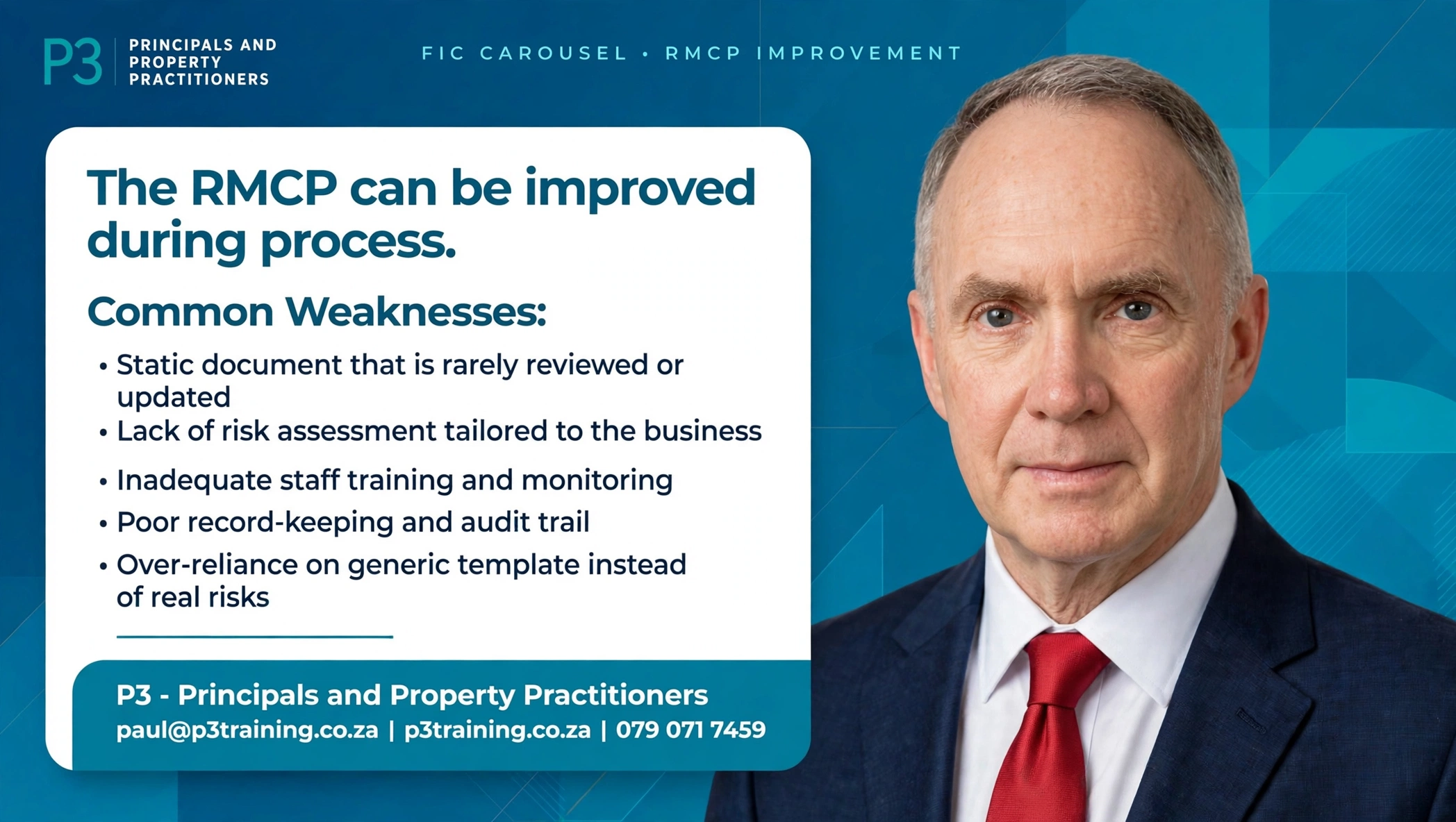
THE RMCP CAN BE IMPROVED DURING THE PROCESS
TRAINING IS TESTED, NOT MERELY CLAIMED
Section 43 of the FIC Act requires ongoing training to enable employees to comply with the Act and the institution's RMCP.
The FIC may request:
- The training plan.
- Training material.
- Attendance registers.
- Certificates.
- Evidence of ongoing training.
But the evidence does not necessarily stop at certificates.
Employees may be interviewed.
Their understanding may be tested.
The real question becomes:
DID THEY ATTEND?
OR DID THEY LEARN?
In the inspection material reviewed, employees confirmed receiving training and demonstrated knowledge of the FIC Act.
The institution was consequently found compliant with section 43.
That is far more valuable than a testimonial.
It is independent evidence that the training was understood.
REMEDIATION DOES NOT ERASE THE FINDING
This is where accountable institutions must remain realistic.
Remedial action does not automatically cancel the original non-compliance.
The final inspection material makes the distinction clear.
Remediation may be irrelevant to the question of whether the original conduct warrants referral for a possible sanction.
However, remediation may be considered when the appropriate sanction, particularly the financial penalty, is determined.
REMEDIATION DOES NOT REWRITE THE PAST.
IT MAY INFLUENCE WHAT HAPPENS NEXT.
THIS IS WHERE MITIGATION BEGINS
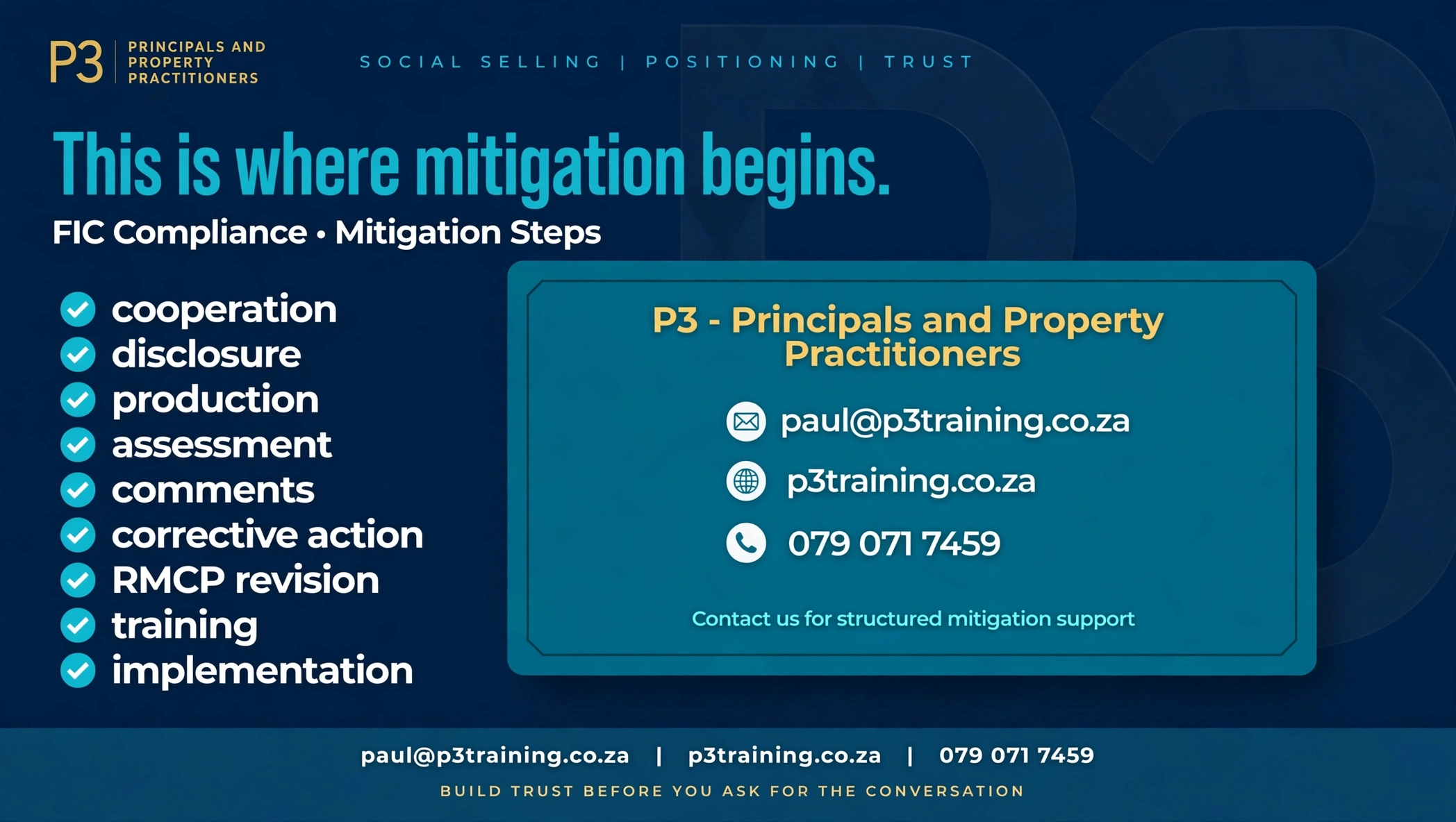
Those actions are not excuses.
They demonstrate whether the accountable institution has learnt from the process and reduced the likelihood of recurrence.
THE WRONG RESPONSE
The wrong response is:
"The FIC is being unreasonable."
The better response is:
"What has the inspection exposed, and what evidence can we produce to show that it has been corrected?"
An institution may disagree with a finding.
If so, it should respond with law, facts and evidence.
Not outrage.
Not assumptions.
Not unsupported denials.
FINAL THOUGHT
THE INSPECTION IDENTIFIES THE GAP.
THE DRAFT REPORT EXPLAINS THE GAP.
THE REMEDIATION CLOSES THE GAP.
That does not guarantee that a sanction will disappear.
But it may demonstrate cooperation, corrective action, institutional learning and reduced risk of recurrence.
DON'T WASTE THE INSPECTION.
USE IT.