On 3 July 2023, the Information Regulator imposed South Africa's first administrative fine under POPIA.
The amount was:
R5 MILLION.
The fine was imposed on the Department of Justice and Constitutional Development.
That headline should get everyone's attention.
But the amount is not the most important part of the story.
The enforcement sequence is.
IT STARTED WITH A SECURITY COMPROMISE
In September 2021, the Department of Justice and Constitutional Development suffered a cyberattack.
The incident affected its electronic systems, encrypted internal documents and resulted in the loss of more than 1,200 files containing personal information.
The Information Regulator investigated and identified failures relating to the protection of personal information.
These included concerns regarding technical security measures, software licences and notification of the security compromise.
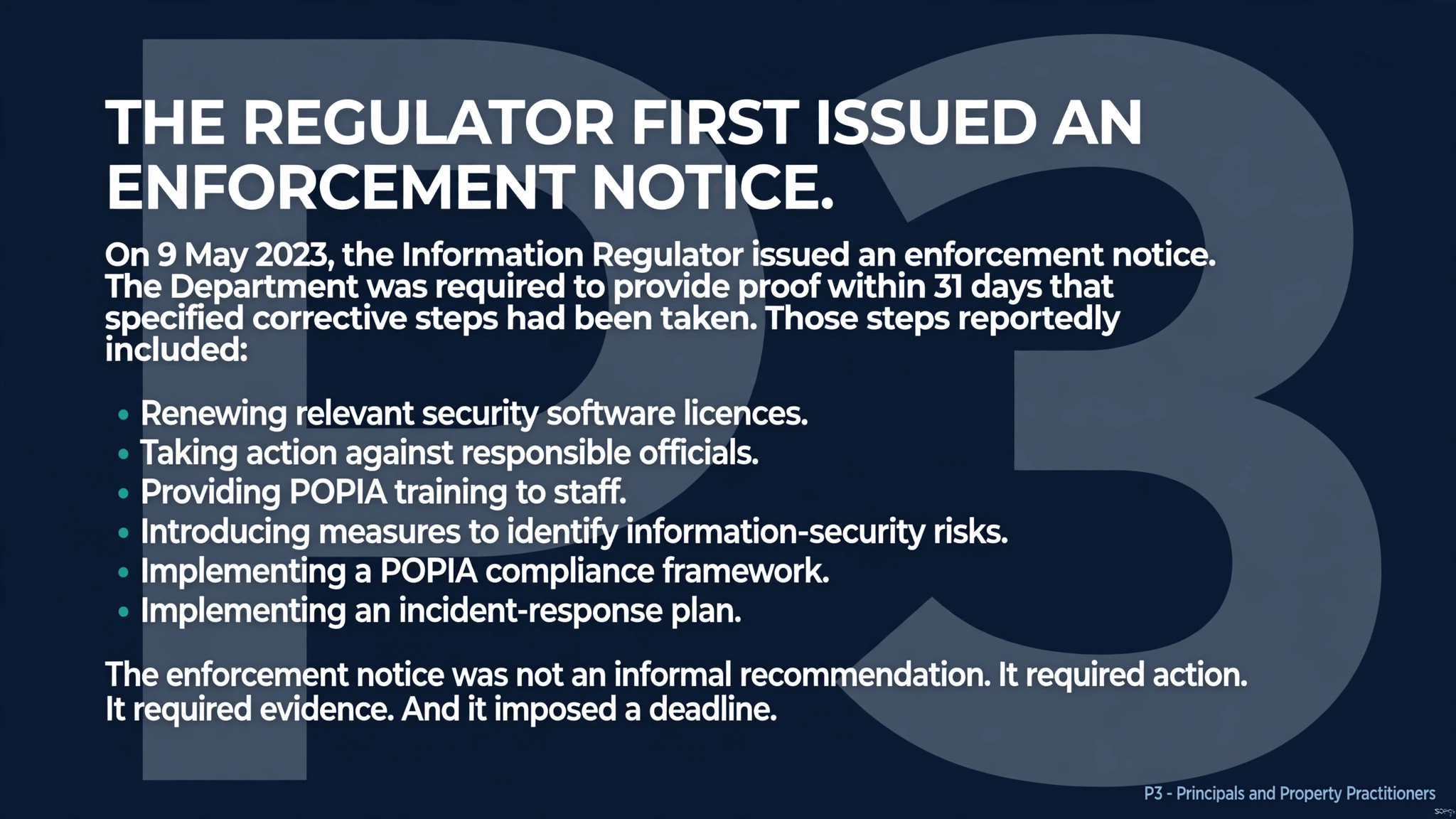
But the R5 million administrative fine did not immediately follow the original security incident.
THE DEADLINE PASSED
The Department of Justice and Constitutional Development did not successfully appeal the enforcement notice.
It also failed to demonstrate compliance with the notice within the period provided.
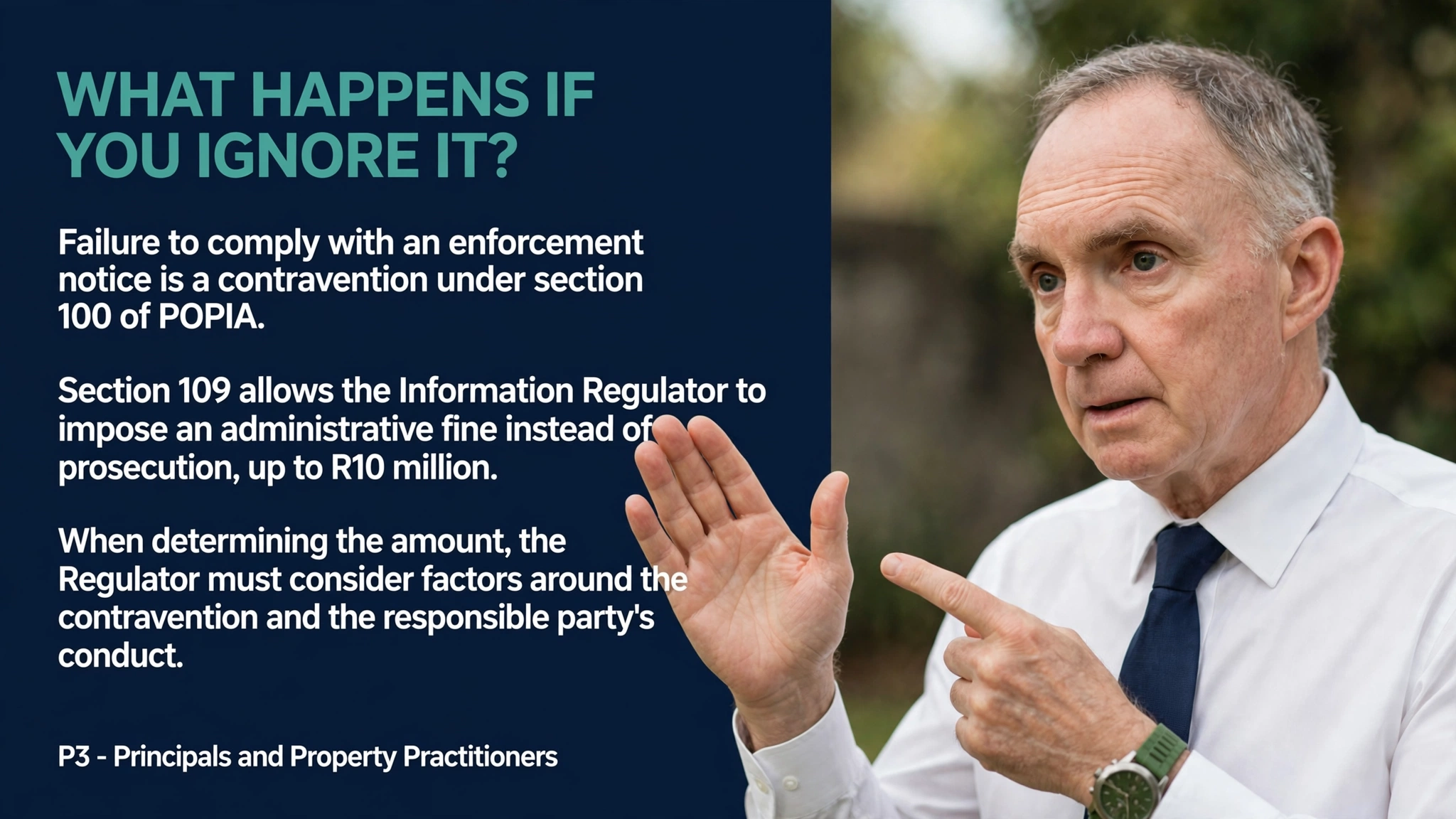
The Information Regulator then issued an infringement notice and imposed the R5 million administrative fine.
THE BREACH CREATED THE INVESTIGATION.
THE UNANSWERED NOTICE ESCALATED THE CONSEQUENCE.
THAT DISTINCTION MATTERS
Many businesses assume that the greatest POPIA risk is the original mistake.
The lost document.
The insecure email.
The compromised device.
The unauthorised disclosure.
Those events may trigger an investigation or assessment.
But what happens next may become even more important.
Did the organisation respond?
Did it investigate?
Did it correct the weakness?
Did it train staff?
Did it implement the required controls?
Did it provide the Information Regulator with the evidence requested?
THIS SHOULD SOUND FAMILIAR
The principle is similar to the one emerging from FIC inspections.
A regulator identifies a weakness.
The regulator explains what must be corrected.
The organisation is expected to respond.
Evidence of remediation is required.
Failure to act increases the risk.
The legislation may differ.
The underlying operational lesson does not.
REGULATORY CORRESPONDENCE
IS NOT ORDINARY MAIL.
THE INFORMATION OFFICER MUST RECOGNISE THE MOMENT
A letter from the Information Regulator should never disappear into a general inbox.
It should not sit unanswered while management decides who owns the problem.
It should not be treated as something to address when the business becomes less busy.
The Information Officer should immediately determine:
- What is being alleged?
- What information has been requested?
- What action is required?
- What deadline applies?
- What evidence must be produced?
- Whether specialist advice is required?
- Who is accountable for implementation?
The response process should be controlled, documented and monitored.

THE REAL LESSON
A breach does not automatically mean that an organisation will receive a R5 million administrative fine.
But ignoring the Regulator can transform an already serious problem into something considerably worse.
The sequence matters:
- A security compromise occurs.
- The Information Regulator becomes involved.
- An enforcement notice requires corrective action.
- The organisation must comply or use the available appeal process.
- Failure to do either creates further exposure.
That is the compliance lesson every Information Officer should understand.
FINAL THOUGHT
South Africa's first POPIA administrative fine was R5 million.
But the amount should not be the only headline.
The more important warning is the sequence that produced it.
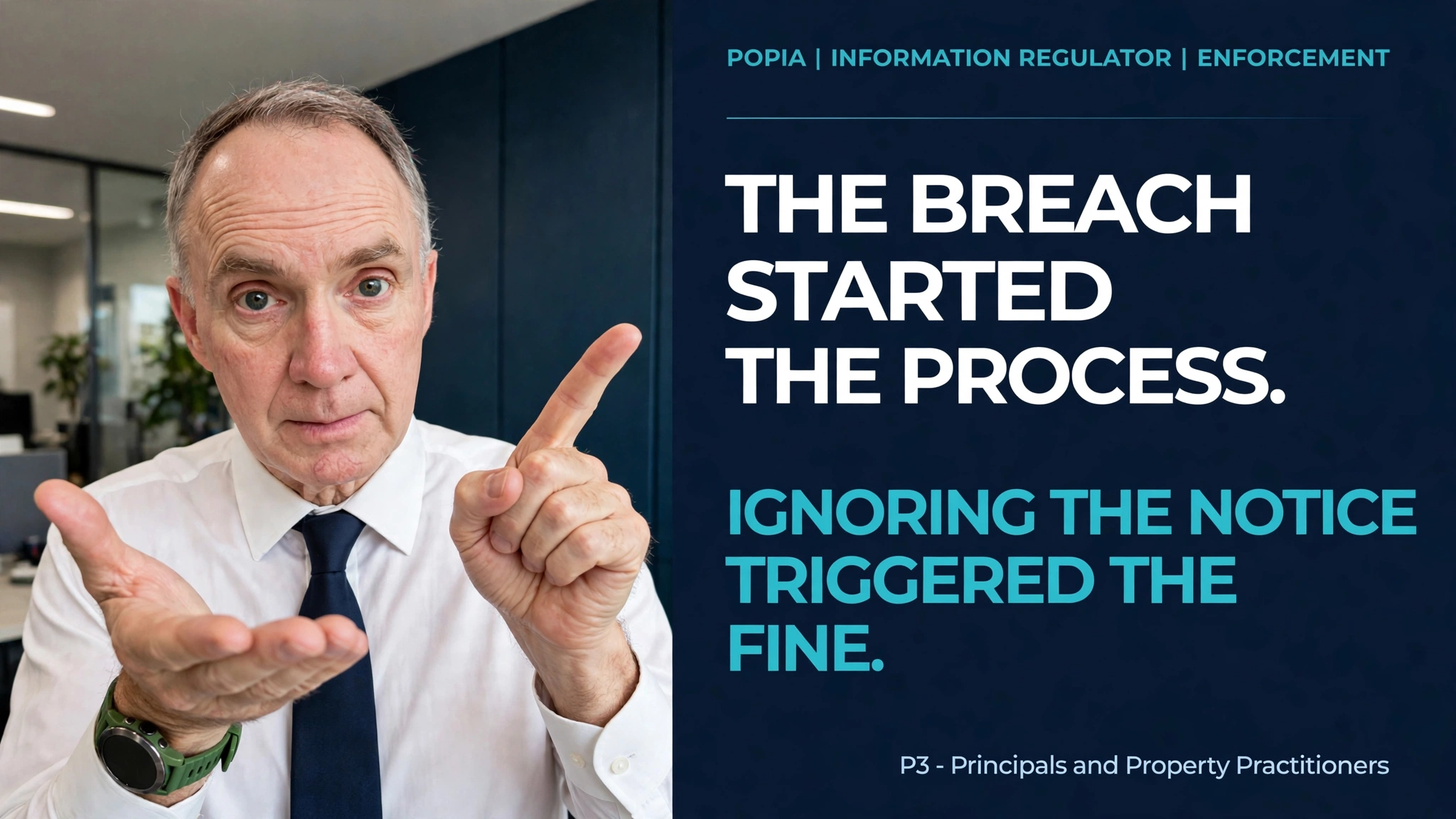
THE BREACH STARTED THE PROCESS.
IGNORING THE NOTICE TRIGGERED THE FINE.
WHEN THE REGULATOR WRITES, RESPOND.